During winter road maintenance, snow plow blades act as the primary cutting edge to remove snow and ice from highways, driveways, and airport runways. Thanks to the right snow plow blade, operators can clear surfaces efficiently while minimizing road damage and reducing equipment downtime.
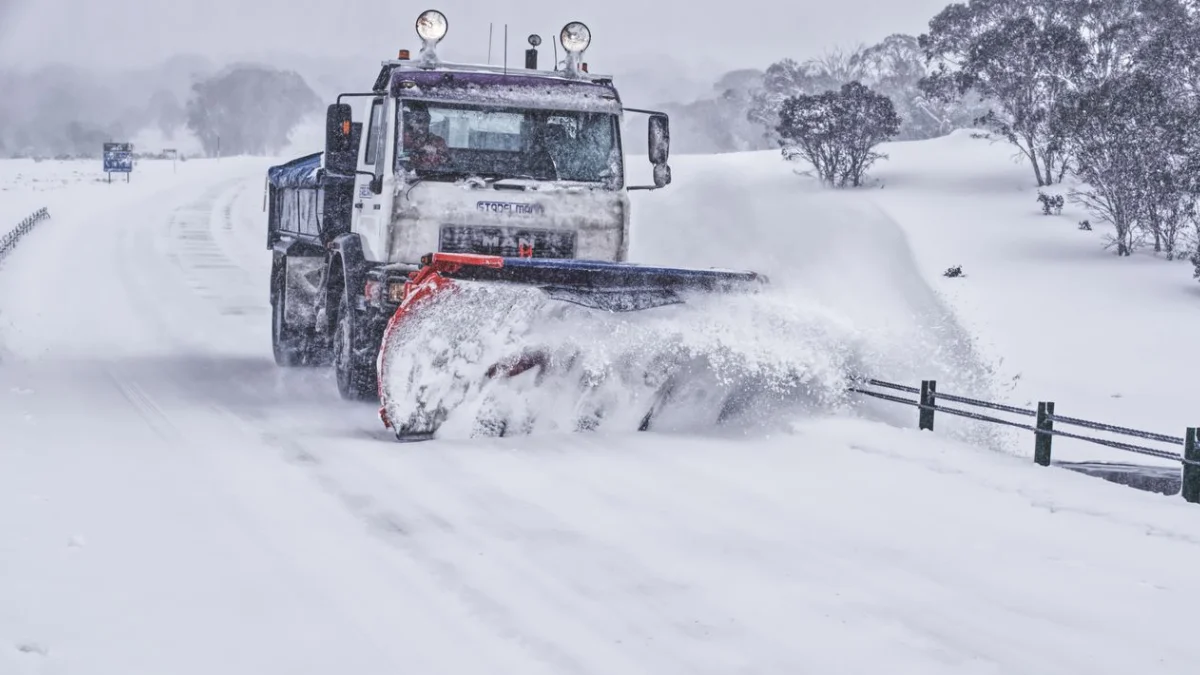
(Photo by Mark Thomas on Pexels.com)
Currently, the two main types of materials for snow plow cutting edges are standard steel and tungsten carbide. Each material addresses different road conditions and budgets, presenting its own unique benefits and drawbacks. Today, we will compare steel and carbide snow plow blades in detail, and explore how to further extend the service life of your blades for severe environments. For more specific comparisons and solutions, please read on!
Steel Snow Plow Blades
Steel snow plow blades are currently the most widely used cutting edges for winter road maintenance, outfitting the majority of municipal fleets. The primary reason for their popularity is the highly affordable initial cost.
Thanks to the natural aggressiveness of the material, steel cutting edges do an excellent job of slicing through hard-packed snow. By scraping the road surface effectively, operators can significantly reduce the amount of salt and chemical deicers needed to clear the streets. Moreover, steel edges are relatively lightweight, making them highly accessible for various types of plowing equipment.
However, relying solely on standard steel comes with significant challenges. One of the most critical issues is the rapid wear rate. Because standard steel lacks extreme wear resistance, the blades wear down prematurely when continuously rubbing against rough road surfaces. As a result, operators have to deal with frequent blade changes and unwanted equipment downtime during severe winter storms.
Apart from poor durability, the aggressive scraping action can actually be a double-edged sword. If steel blades are mounted without proper guards or protective shoes, they can easily gouge and severely damage the underlying pavement.
Carbide Snow Plow Blades
Though looking similar to a standard steel blade, a carbide snow plow blade is constructed differently. It mainly comprises a steel blade body and a tungsten carbide insert brazed into the steel working face. Thanks to the extreme hardness of tungsten carbide, these cutting edges maintain a sharp profile, making them highly effective for removing thick ice and deep snow.
There are several reasons for choosing carbide snow plow blades. One of the most important reasons is their outstanding wear resistance and extended service life. As mentioned above, traditional steel blades wear out quickly and require frequent replacements. In contrast, testing indicates that a single carbide blade can offer the durability of 20 to 30 standard steel blades. While a steel edge might only last a few snow events, a carbide blade can often operate for more than three winter seasons. Using carbide blades significantly reduces equipment downtime and maintenance efforts.
Apart from impressive longevity, carbide blades are ideal for medium to high-speed plowing on relatively smooth road surfaces. Plowing at these speeds actually helps reduce heavy impacts on the blade.
However, carbide blades also have certain limitations. Because tungsten carbide is an extremely hard material, it is also brittle. This means it is more likely to crack or break rather than wear down when striking rigid obstacles. To prevent the brittle carbide insert from cracking, operators usually need to mount a steel cover blade or use plow guards to protect their investment. Moreover, rigid carbide cutting edges do not conform well to uneven road surfaces.
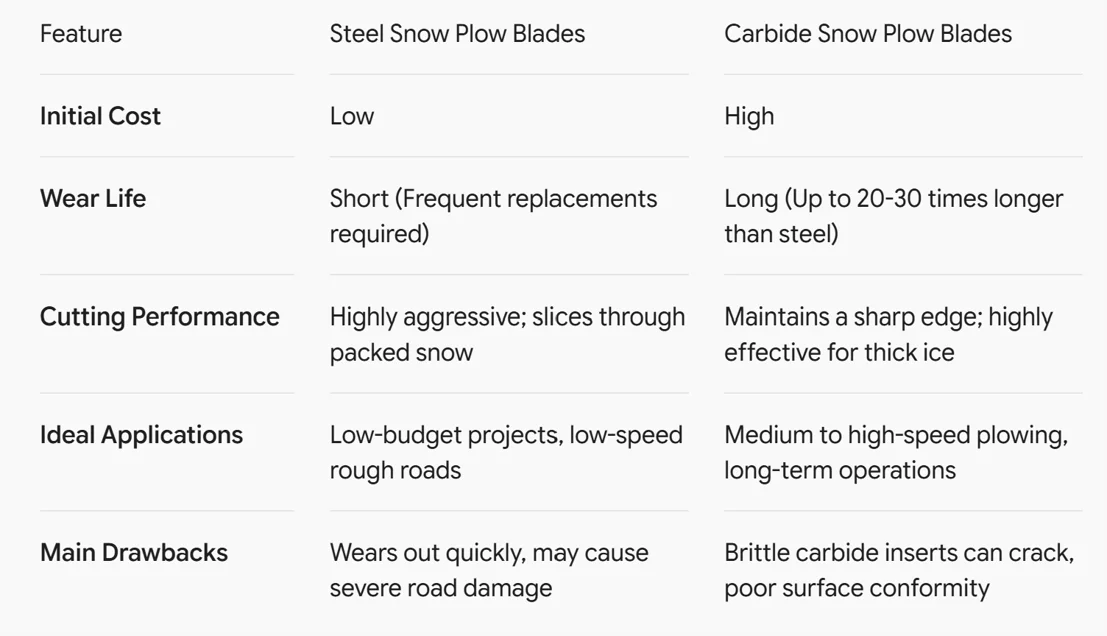
Steel vs. Carbide Snow Plow Blades: A Quick Comparison
How to Enhance Carbide Blade Durability: Carbide Hardfacing
Even though carbide snow plow cutting edges feature excellent wear resistance, they are not completely perfect. As mentioned above, a carbide blade still relies on a standard steel body to hold the inserts in place. During severe winter operations, the steel body is at a high risk of rapid wear when rubbing against abrasive roads. Once the surrounding steel wears away, the rigid carbide insert will lose its structural support and eventually fall out.
To solve this issue and deal with more severe conditions, there is a highly cost-effective method to maximize the overall service life of the blade: carbide hardfacing. Carbide hardfacing is a process of securely applying extremely hard materials onto the surface of the steel body, creating a robust protective layer. This treatment makes the steel surface exceptionally resistant to severe abrasion.
For snow plow applications, the most ideal material for this process is tungsten carbide grits. Unlike a solid, continuous piece of carbide insert, carbide grits are crushed hard particles that look somewhat like coarse gravel or sand. These hard particles are evenly mixed into or paved along with the welding matrix. By hardfacing a dense layer of carbide grits onto the bottom and impact zones of the steel body, the lifespan of the steel can be massively increased, ensuring the carbide inserts stay firmly in place until they are fully utilized.
Moreover, the actual performance of the hardfacing layer depends on a careful balance of materials. A hardfacing compound mainly consists of tungsten carbide and a cobalt binder. Thanks to a higher percentage of tungsten, the grits become much harder, providing extended wear life. However, excessive hardness can make the material too brittle. Therefore, a specific amount of cobalt is added to enhance the shock absorption ability, which is crucial for handling the heavy impacts of snow plowing.
By precisely adjusting the ratio of tungsten and cobalt, along with the grain size of the particles, manufacturers can achieve the perfect combination of supreme hardness and excellent shock resistance.
Custom Wear Solutions: Tungsten Carbide Grits & Hardfacing Services
To ensure your carbide snow plow blades achieve their maximum service life, applying the right hardfacing material is crucial.
We provide premium tungsten carbide grits designed specifically for extreme wear environments. Thanks to our strictly controlled manufacturing process, our carbide grits offer the ideal balance of hardness and shock resistance, ensuring your steel blade body remains fully protected against severe wash-out. Moreover, apart from supplying the raw grit materials, we also offer professional hardfacing services to meet your specific project needs.
For more detailed specifications, custom solutions, or a free quote, just contact our team today!